

Principal Investigator
Kevin Haigis 

Chief Scientific Officer, Dana-Farber Cancer Institute
Associate Professor of Medicine, Harvard Medical School
During his graduate training at the University of Wisconsin-Madison, Dr. Haigis studied the somatic genetics of intestinal tumor initiation under the guidance of Dr. William Dove. In his post-doctoral work, Dr. Haigis studied the oncogenic properties of the RAS GTPases in the laboratory of Dr. Tyler Jacks in the Massachusetts Institute of Technology Center for Cancer Research (now the David H. Koch Institute for Integrative Cancer Research).
Contact: kevin_haigis at dfci dot harvard dot edu
Executive Support
Jenny Thurber

Executive Support Specialist I
Contact: jennifer_thurber at dfci dot harvard dot edu
Work: 857-215-0447
Senior Scientists
Deborah Burkhart

Education:
S.B. in Biology, Massachusetts Institute of Technology (2003)
S.B. in Literature, Massachusetts Institute of Technology (2003)
Ph.D. in Cancer Biology, Stanford University (2009)
Research Interests:
Throughout my education and training, my main interests have been in the development and study of mouse models of cancer, more specifically using mouse models to understand the molecular mechanisms involved in tumor evolution and the implications for potential therapies.
Contact: deborahl_burkhart at dfci dot harvard dot edu
OLESJA POPOW

Education:
B.S. in Biomedical Science, University of Marburg, Germany (2010)
M.S. in Biomedical Science, University of Groningen, The Netherlands (2012)
Ph.D. in Cancer Biology, University of Dundee, UK (2016)
Research Topic: Analysis of proteome-wide changes in KRas-mutant cells and tissue by mass spectrometry (Co-advised by Steven Gygi, HMS)
Research Interests: Cancer biology, cell biology, proteomics
Project Description:
Title: Tissue-specific oncogenic activity of KRas.
Oncogenic KRAS mutations occur frequently in some human cancers (e.g. pancreas, colon, lung), but are rarely detected in other cancer types (e.g. liver, kidney, brain). Based on this and other observations we hypothesize that some tissues are sensitive to the oncogenic activity of mutant KRas whereas other tissues are resistant. To identify the tissue-specific mechanisms underlying KRas sensitivity and resistance I am measuring the effects of mutant KRas expression on the (phospho-)proteome by mass spectrometry in a variety of tissues from genetically engineered mice. In addition, I am using proximity labeling and AP-MS to better understand how post-translational modifications and the interactome of KRas contribute to its distinct signaling outputs in different tissue contexts.
Contact: olesja_popow at dfci dot harvard dot edu
Postdoctoral Fellows
Elif Kon 

Education:
BS Genetics and Bioengineering, Yeditepe University, Turkey (2012)
MS Biotechnology, Yeditepe University, Turkey (2013)
PhD Biomedical and Pharmaceutical Science, Universite Catholique de Louvain, Belgium (2019)
Research Topic: The Role of Inherited SNPs in KRAS-Driven Colorectal Cancer Progression
Not every inherited variant in a cancer-related gene actually affects a person's risk. Many of these variants—often flagged as "variants of uncertain significance," or VUS—turn up in genes tied to hereditary cancer syndromes, but we still don't really know what most of them do functionally. That gap is what drives my research: I'm trying to understand how germline variants in the RAS signaling pathway influence the behavior of somatic KRAS mutations, which are among the most common drivers of cancer.
I use genetically engineered mouse models to look at how these inherited and acquired mutations interact—how that interplay shapes when and how tumors arise, how they evolve and diversify, and how they respond (or fail to respond) to treatment in colorectal cancer. Alongside that, I use proliferation assays, drug-response assays, and biochemical GTPase assays to investigate how specific KRAS VUS reshape its interactome and generate distinct signaling outputs.
Ultimately, I'm trying to identify the genetic modifiers that explain why KRAS-mutant cancers behave so differently from one patient to the next—and use that knowledge to move toward more precise, personalized approaches to prevention and treatment.
Research Interests:Cancer biology; cell biology, genetically engineered mouse models, CRISPR
Contact: elif_kon at dfci dot harvard dot edu
Stefania Bovo Minto 

Education:
BS in Biomedical Sciences, Barao de Maua University, Brazil (2013)
MS in Pathology, University of Sao Paulo, Brazil (2016)
PhD in Pathology, University of Sao Paulo, Brazil (2021)
Research Topic: Organoid engineering may help in the study of drugs selection to each kind of oncologic patient. Thus, our project aims to discover new possible target genes that could be used in the cancer therapy field.
Research Interests: Organoid engineering, heterozygous point mutations, CRISPR, cancer mouse model, cancer biology.
Project Description: Creating organoid lines carrying heterozygous point mutations in a variety MAPK signaling genes using next generation CRISPR tools.
Contact: stefania_bovominto at dfci dot harvard dot edu
Michael McGill

Education:
BA Biology, Saint John's University (2019)
PhD Genetics and Genomics, Texas A&M University (2023) - including Graduate Certificate in Bioinformatics and Computation Biology
Research Topic:
Research Interests:
Project Description:
Contact: michael_mcgill at dfci dot harvard dot edu
Yawen Zheng 

Education:
Ph.D. Biochemistry and Molecular Biology, School of Medicine, Zhejiang University, China (2023).
Joint-Ph.D. Cancer Biology, Radiation Oncology Department, University of Michigan,USA (2020-2022)
Research Topic: Investigating the correlation between oncogenic KRAS and metabolism
Research Interest: Cancer metabolism, cancer biology and cancer immunology
Contact: yawen_zheng at dfci dot harvard dot edu
Graduate Students
Kidist Ashami 

Education:
B.A. in Biology, Berea College
Research Topic: The role of tumor microenvironment in metastasis of colorectal cancers.
Research Interest: Cancer Biology, Immuno-oncology, tumor immune microenvironment (TIME), metastatic cancers, Microsatellite instability (MSI)
Project description:
While MSI+ metastatic cancer patients have demonstrated high response rate to immune check point blockage (ICB) therapies, MSS colorectal cancers have long been considered resistant to immunotherapies. Also, approximately 95% of metastatic CRCs are classified as MSS and do not exhibit an immunogenic phenotype. Thus, I am interested in investigating the role of TIME on metastasis of colorectal cancers and in identifying therapeutic targets for combinatorial therapeutic approaches to enhance the efficacy of ICB therapies in MSS metastatic CRCs.
Contact: kidisth_ashami at dfci dot harvard dot edu
Amanda May 

Education:
B.S. Duke University - Major Biology (Concentration in Pharmacology), minor in Chemistry (2021)
Research Topic: Cancer Pharmacology and Biochemistry
Research Interest: cancer, drug discovery, pharmacology
Project description:
To attempt to find promising therapeutic targets for the RAS mutant A146T, that will ultimately aid in cancer therapies.
Contact: amandae_may at dfci dot harvard dot edu
Mathieu Epinette
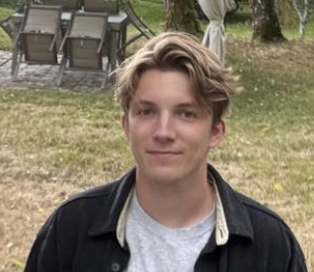
Education:
B.S. in Biochemistry from Northeastern University (2023)
Research Technician in Tyler Jacks’ Lab @ MIT (2023-2025)
Project description:
Defining APC Interactomes and characterizing the oncogenic impact of APC loss across tissues.
Contact: mathieu_epinette at dfci dot harvard dot edu